

- Article
The Hammer Horror Omnibus Has Risen from the Grave!
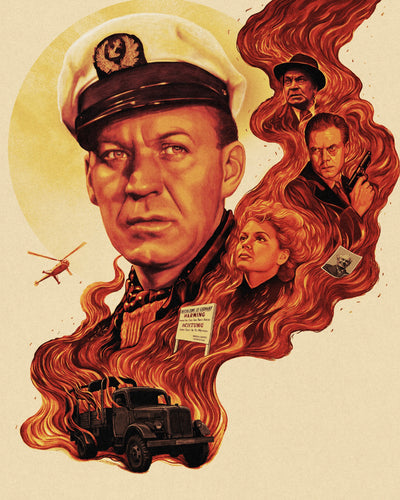
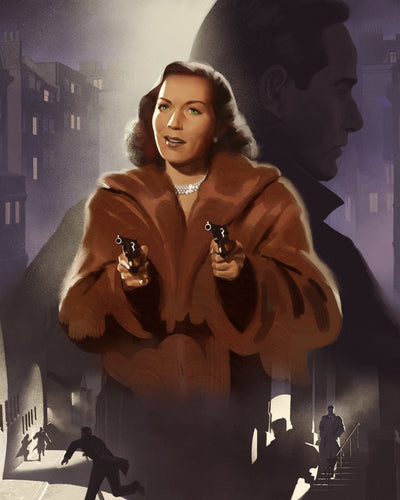
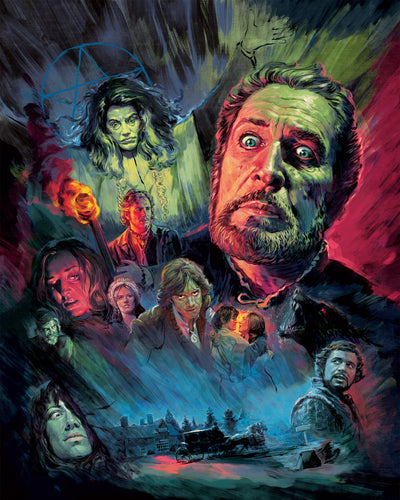
We’re delighted to confirm that after languishing out of print for decades and remaining unobtainable for the vast majority of fans, The Hammer Horror Omnibus: Volumes 1 & 2 are finally available to own and enjoy once more. These much-loved books will live again with striking new artwork and brand new forewords and afterwords complementing the novelisations of eight Hammer classics.
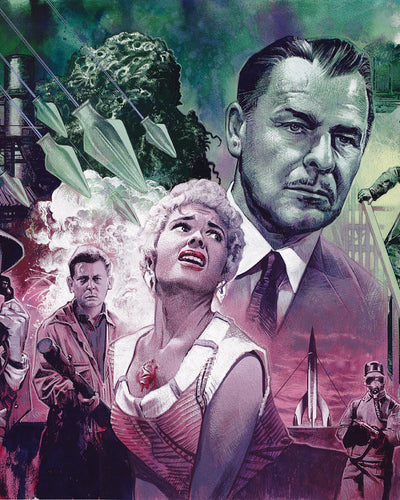
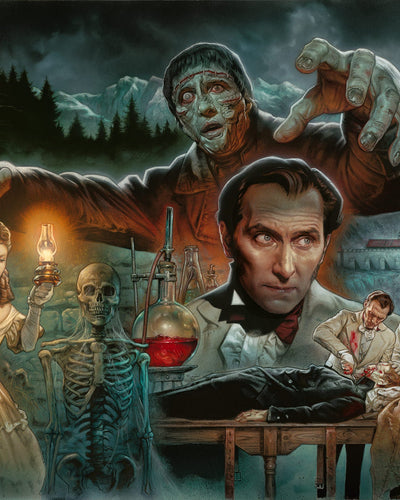
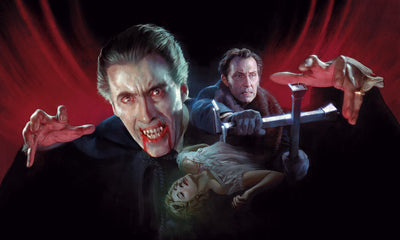
Each volume of The Hammer Horror Omnibus (also previously known as The Hammer Horror Film Omnibus) contains four adaptations, and all eight are the original versions written by the acclaimed John Burke. And we’re delighted to report that the new covers have been designed by the renowned Graham Humphreys.
So, what makes these collections so special?
For many longstanding fans there’s an undeniable sentimental pull. In the days before Betamax and VHS battled it out for supremacy in the videotape arena, the luxury of watching your favourite films whenever you wanted was confined to a lucky few with projectors and rare 16mm prints. For almost every afficionado of horror movies it was a case of waiting for repeats on television, one-off screenings at local cinemas or the occasional season at venues such as the (then) National Film Theatre. There were comic strip adaptations, of course, but the stories they conveyed tended to be greatly abbreviated versions of their cinematic counterparts.
The only readily available way to slip back into the filmic worlds of Victor Frankenstein, Count Dracula and other Hammer legends was via novelisations. Books were the Blu-rays of the pre-digital age. A library door could lead you into the Mummy’s tomb; a bookshelf could hold a plague of Cornish zombies, and you could casually slip Rasputin and the Gorgon into your back pocket and still have enough room for a tube of Toffos.
The joy of finding the novelisation of a favourite film nestling in the 10p section of a second-hand book shop was immeasurable. They may have been tomes of terror, but the hours of happiness they afforded can’t be adequately expressed. For anyone who recalls those distant days, these ‘re-releases’ will open floodgates of happy memories and the chance to return to lands of Hammer prose that remain anything but prosaic. And for those discovering them for the first time, the horror heritage adventure awaits.
But both omnibuses offer much, much more than the warm afterglow of nostalgia. Because, as readers will discover, these books stand the test of time and emerge as fast-paced, tightly-written stories with vibrant characters, well-wrought fiends and a nice line in wry humour.

Spoilers ahead! You have been warned.
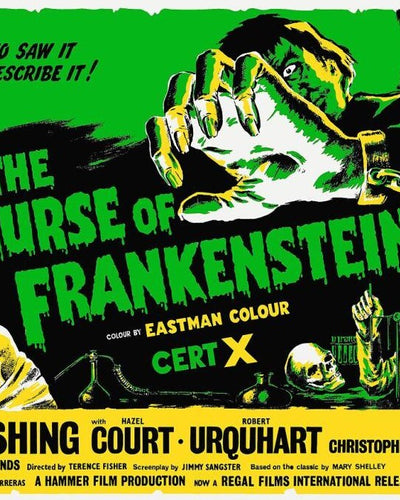
The highlight of Volume 1 is arguably The Curse of Frankenstein, which is immediately followed by The Revenge of Frankenstein, meaning the two works essentially combine to create a single, satisfying story. Burke shrewdly elects to relate the tale in the first person, with Victor Frankenstein as our not-so-genial storyteller. The Baron is not exactly an unreliable narrator; more a misguided one. His vanity, selfishness and sheer entitlement are wonderfully captured by Burke, and the scientist’s preening arrogance drives every observation.
This approach allows us to fully grasp Frankenstein’s view of other people, and by extension, his own sense of self. For example, when Paul begins to doubt the direction of their experiments and declares he’ll warn Elizabeth of the growing dangers, the Baron’s thoughts are piercingly aloof: ‘He was really disappointingly naive. With his bourgeois background, he could, of course, not understand how such matters were arranged in families like ours. Elizabeth would listen to me rather than to him, and she would certainly not leave here.’
His take on his former lover, Justine, is even more wince-inducing. When she becomes understandably upset that he’s backtracking on his promise of marriage, he observes, ‘I was really in no mood to deal with a serving wench’s hysteria. She needed the sharp slap of reality to bring her to her senses… Hatred burned in eyes which I had seen lit with a very different fire. Even when her violence and lack of breeding repelled me as they did now, I could not help but observe what a splendid specimen of womanhood she was.’
In Burke’s novelisation we’re left in no doubt that the ‘monster’ isn’t the reanimated creature, but the man who created him. Even his killing of Professor Bernstein fails to puncture his remarkable egotism. By underplaying the attack, Frankenstein’s inhumanity is starkly underlined and the murder itself becomes one of the narrative’s most chilling moments: ‘The rail gave way. Bernstein seemed to hang over the drop for an interminable second, and then he plunged to the marble floor below. There was a crack as his head struck, and his arms and legs splayed out like those of a broken doll. He lay quite still as Elizabeth rushed out and moaned with horror.’
The kicker comes with Frankenstein’s very next thought: ‘I hoped the impact had not damaged his brain.’
As for the memorable depiction of ‘the creature’… Well, readers can unwrap those bandages when devouring the book!
The second volume contains Dracula: Prince of Darkness and many will eagerly turn to this tale to see how the Count fares in book form. The adaptation turns out to be an eery slow burn, but the vampire’s reveal is pleasingly imbued with a sense of Grand Guignol: ‘As Helen Kent reeled to one side, the long fingers caught her and held her upright. The canine fangs gleamed exultantly… Count Dracula was smiling.’
The Plague of the Zombies, also from the second volume, stands as one of the collection’s more surprising novelisations. The friendship between Alice and Sylvia is drawn with insight and authenticity, making the tragedy of what occurs all the more dreadful. And although there’s no skimping on the horror, Burke also succeeds in capturing the tale’s heartbreak and pathos, and his slight tweaks to the source material, plus some injections of dark humour, will delight many fans of the original film.

Author, John Burke
John Burke himself was an old hand at writing by the time he became involved with these titles. Born in 1922, he was already demonstrating a passion for genre fiction by the late 1930s and early 40s, working on science fiction/fantasy fanzines including The Fantast and The Satellite. He penned a number of short stories and found immediate success when, writing as J. F. Burke, his breakout novel, 1949’s Swift Summer, won the Atlantic Award in Literature. Books including Another Chorus (1949), Haunted Streets (1950), and Chastity House (1952) quickly followed and his thriller, Echo of Barbara (1959), was used as the basis for the 1960 British movie of the same name, directed by Sidney Hayers.
His output was prolific and he excelled in a broad variety of genres, writing under several pen names. These days however, he’s chiefly remembered for his adaptations of films and television programmes.
From classic movies like Look Back in Anger (1959) and The Entertainer (1960), to iconic shows including Jason King, Strange Report and The Protectors, he novelised an extraordinary number of screen works, almost always remaining faithful to the original stories, whilst adapting them with verve, directness and where appropriate, a degree of fun. For example, the US version of his novelisation of A Hard Day’s Night (1964) begins with a new scene depicting John, Paul, George and Ringo enjoying a banter-filled game of football in their hotel room (where else?) and ends with the words, ‘Then the helicopter roared away over the rooftops, carrying The Beatles to new heights, new audiences – and new glories… YEAH! YEAH! YEAH!’ The book went on to sell well over a million copies and is now viewed as essential memorabilia by many Beatles fans.
In terms of horror, aside from The Hammer Horror Omnibus books he wrote numerous short stories, original novels including The Devil’s Footsteps (1976) and even adapted Dr Terror's House of Horrors (1965).
John died, aged 89, in September 2011, leaving a legacy of books which readers continue to enjoy. His novelisations of The Gorgon (1964), The Curse of Frankenstein (1957), The Revenge of Frankenstein (1958) and The Curse of the Mummy's Tomb (1964) are collected in Volume 1 of The Hammer Horror Omnibus, and in Volume 2 you’ll find his adaptations of Dracula: Prince of Darkness (1966), The Reptile (1966), Rasputin - The Mad Monk (1966) and The Plague of the Zombies (1966).
Volume 1 contains a new foreword by horror, mystery and science fiction author and screenwriter Stephen Gallagher, plus an afterword by award-winning horror writer and critic, Ramsey Campbell. The second volume comes with a new foreword by award-winning horror and fantasy author Stephen Laws, and an afterword by screenwriter, novelist and showrunner Stephen Volk.
These omnibuses throw new light on old classics and are engrossing reads that all fans can look forward to spending time with. Chilling, thrilling and so vividly written that you can almost see the Technicolor blood spattered across every page, we’re delighted to welcome them back into Hammer’s house of horror.
The Hammer Horror Omnibus: Volumes 1 & 2 are available to pre-order now! And, of course, many of the films mentioned above ready to be added to your collection, including The Curse of Frankenstein, The Revenge of Frankenstein and Dracula: Prince of Darkness.
You can also check out an earlier interview with Graham Humphreys in which he talks about his art and, in particular, his work with Hammer.