

- Article
It’s alive! Reviving the music of Hammer’s Frankenstein
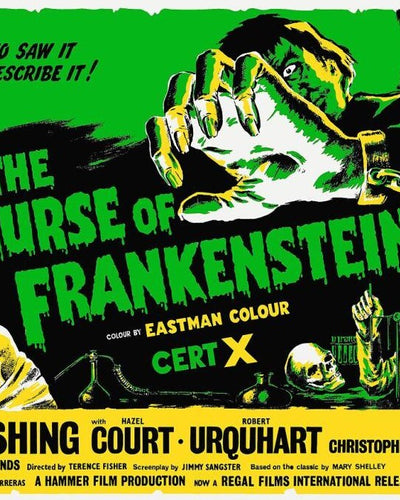
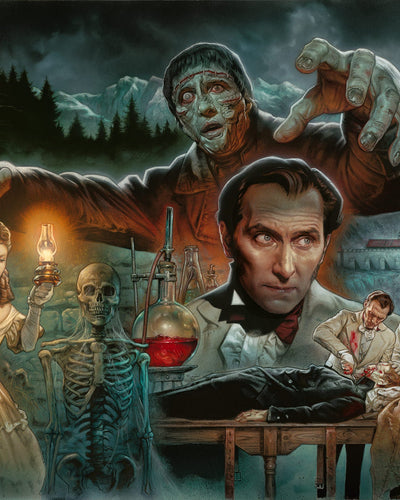
The Curse of Frankenstein Limited Edition Vinyl EP Soundtrack is the first in a new range that will see music from Hammer classics remastered and made available as never before. To celebrate the launch, we’re taking a brief look at the cinematic history that’s brought us to this point, and we reveal the challenges faced (and overcome!) in giving the music of Frankenstein a brand new life…
Silent cinema was never silent. It was rarely even quiet. The larger screening venues had full orchestras providing lavish musical accompaniment to their films, meaning that a trip to the flicks was a treat for the ears as well as the eyes. Smaller cinemas would have smaller ensembles, of course, and occasionally a solitary pianist would valiantly tickle the ivories for 90 or minutes or so, either following sheet music provided by the studios, or ad-libbing as the action unfolded onscreen.
Some historians have claimed that, before synchronised sound became common in movies, music was initially laid on to cover the noise of the clanking, primitive projectors, and it only gradually became apparent that such accompaniment could enhance the story being told through film. But, whatever the truth of its origins, music was a part of the movie experience long before The Jazz Singer (1927) ushered in the era of ‘talkies’.
It’s been suggested that horror movies have traditionally delivered the most varied and unexpected soundtracks, plucking musical elements from dramas, romances, thrillers and even comedies, then adding cues unique to the primary genre. From Franz Waxman’s ethereal melodies heard in The Bride of Frankenstein (1935) to Hildur Guðnadóttir’s ‘sonic rollercoaster’ of a score (to use her own evocative words) for The Bride! (2026), horror deploys music to mislead and reassure, to build fear and allay it, to enhance and, in a sense, offer a guide through the visual and narrative terror.

Reminiscing about his time with Hammer, composer James Bernard admitted, ‘I was really rather spoilt, because of the very talented people that the orchestra was made up of – these were highly respected and very distinguished musicians, and some of the most talented at their particular trade.’
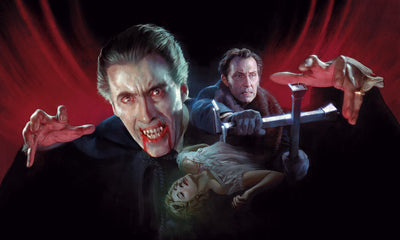
Hammer’s horror films became known for their memorable scores; while the music for the studio’s most cherished films was varied, it often shared a uniformity of style. When Hammer News caught up with Steve Rogers, one of the team behind this new vinyl range, as he reflected on his earliest memories of music from titles like The Curse of Frankenstein (1957) and Dracula (1958).
‘I would have been a small kid, so I doubt it had any impact on me at all beyond the subconscious kind. As I grew older, however, it became obvious that the music in Hammer films was a character in and of itself: strident, highly memorable and able to stand on its own when you played back a fuzzy audio recording you'd made by holding a cassette player up to the TV speaker to record the theme tune.’
Credit for this - in large part - must go to the creative force responsible for so many of these memorable soundtracks. Universal’s monster series had Waxman. Hitchcock had Herrmann. Hammer had James Bernard, the modest and madly talented composer who wrote the music for classics including The Quatermass Xperiment (1955), The Curse of Frankenstein, Dracula [INSERT YEAR], The Hound of the Baskervilles (1959), She (1965), The Plague of the Zombies (1966), The Devil Rides Out (1968) and Frankenstein Must Be Destroyed (1969).
Looking back on that stage of his career, in 1997 he recalled, ‘In the end, I did more than 20 scores for Hammer… They always wanted scores properly, symphonically written by good composers. It didn’t matter how advanced or discordant the music was, provided it worked for the film… The directors didn’t want to know a lot about the music, which was wonderful, because it meant they didn’t butt in.’

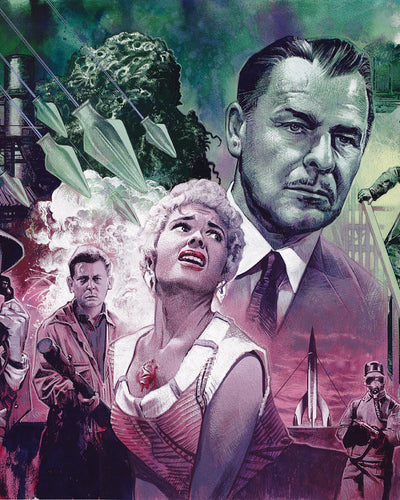
James Bernard’s first film score was for the hugely influential, The Quatermass Xperiment. Many years later, Steve Vertlieb called him, ‘the musical heart and soul of England’s premier horror picture studio’.
That freedom allowed him to experiment and take chances, whilst always delivering music that felt gloriously ‘Hammer’. We asked Steve if he thought these soundtracks could ever be divorced from the movies they were written for.
‘Thanks to the evolution of soundtrack collecting from a niche market to a fully mainstream one – and the growing appreciation of soundtracks – music no longer loses its power for the listeners, even when removed from its original context. Sometimes the exact opposite occurs – there are some soundtracks that gain power when divorced from their source. However, because Hammer films – especially the gothics – remain embedded in the cultural zeitgeist across several generations, there's an immediate and sometimes quite visceral mental link to the film when you hear the music. Hearing the theme to The Curse of Frankenstein is a key example of this.’
And, speaking of The Curse of Frankenstein, when did it become apparent that the movie’s original music could be made available for the first time? We asked Steve if the realisation came while working on the film’s Blu-ray release:
‘As part of the 4K restoration process the audio is restored alongside the picture, and we then take that audio soundtrack and extract clean sections of music to run behind the image gallery on the Limited Collector's Editions… When we went through this process with The Curse of Frankenstein, we ended up with nearly thirteen minutes of clean music for the image gallery. I shared this with David Stoner at our musical partners, Silva Screen (whose relationship with Hammer goes back to the 1990s) and it didn't take very long at all for both of us to arrive at the conclusion that we could release this in some way to fans and collectors…’
We spoke with David Stoner, who continued the story: ‘We discussed varying ways this [the soundtrack] could be presented – a 7” single cut at 33rpm would probably hold everything, or a 10” single cut at 45rpm. The best option was eventually decided to be two 7” singles cut at 45rpm. This would give the best sound quality and provide a better landscape for the visual element, which would be adapted from the Blu-ray release.’

Reviewer Benjamin Welton discussed Bernard’s ‘musical genius’ and stated, ‘There is a tangible excitement in every one of Bernard’s scores.’
And getting back to the audio, what challenges did David and his team face working with material that’s well over 65 years old?
‘Any original tapes from the 1957 scoring sessions are long gone, and the audio files that Steve sent over were transfers from the M&E track, leaving no opportunity for any remixing or mastering.’
So how was this obstacle overcome?
‘Sophisticated software can be, and frequently is, used in taking existing audio files and creating new versions. It has already been used extensively by music companies in taking old songs where only the final released version is available, then identifying and extracting the vocal line in order to present a backing track to which new vocals can be added.
‘With The Curse of Frankenstein files, this process was applied… to create separate elements (stems) of the orchestra as much as possible. Then these stems had any extraneous noise removed and were then rebalanced and mastered to give an overall EQ and sound levels across all the tracks. After that, some minor editing was done to create the four Suites that make up the release.’
But, amidst all our talk about tech, David points out another link with the Hammer of yesteryear, telling us the actual records were, ‘…manufactured, in fact, at The Vinyl Factory pressing plant based in Hayes, Middlesex - only about 15 miles away from Bray Studios!’
This feels like a pleasing connection to Hammer’s heritage – with more soundtracks to come in the months ahead. And it seems appropriate that the first in this new range is for The Curse of Frankenstein. Back in the days when accompaniment for movies was supplied in the cinema itself, the technology used to make this music available would have seemed as advanced as the Baron’s own experiments into the revival process…
Thank you to Hammer Films’ Steve Rogers and David Stoner of Silva Screen for their time and insight.
The Curse of Frankenstein Limited Edition Vinyl EP Soundtrack is available now, with plenty more goodies to explore in The Frankenstein Collection. And finally, fans of James Bernard can enjoy his earlier work for Hammer in The Quatermass Collection.