

- Article
A Celebration of Friendship in Hammer Films
We’ve often discussed the dangerous and downright depraved figures who’ve haunted Hammer movies for decades. From femmes fatales to ingenious villains we never suspected, we’ve covered them all, but to celebrate International Friendship Day, which falls on July 30, we’re turning our attention to characters who’ve been there for each other. Cordial comrades who stood shoulder-to-shoulder against daunting odds, along with mismatched characters who’ve forged unlikely relationships built on love and respect.
This then, is a celebration of friendship in Hammer movies. Surprising, uplifting, occasionally tragic but always interesting, there’s a wealth of relationships to choose from, so we’re presenting a trio which will hopefully showcase some of the most memorable to be found in our favourite films. And along the way we’ll be pausing to salute many more as we suggest the top three friendships presented by Hammer…

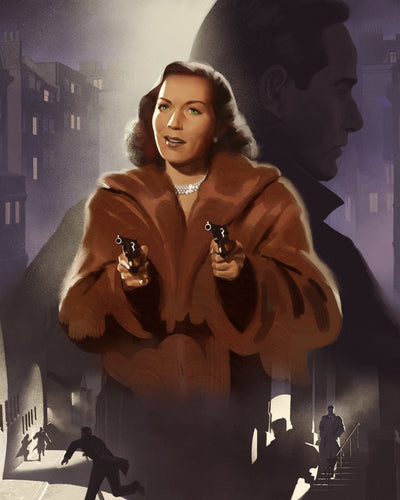
Angela Lansbury and Cybill Shepherd were friends in real life, and the latter recounted fond memories of belting out Gershwin numbers together when the cameras weren’t rolling on The Lady Vanishes.
1. The Redemptive Friendship:
Amanda and Miss Froy from The Lady Vanishes (1979)
The most obvious friendship which blossoms in Hammer’s fabulous comedy-thriller, The Lady Vanishes, is that between Amanda Kelly (Cybill Shepherd) and Robert Condon (Elliott Gould). Despite the fact it’s a remake of a British movie, the story’s central relationship carries loud echoes of classic Hollywood screwball comedies such as It Happened One Night (1934), The Mad Miss Manton (1938) and Bringing Up Baby (1938). And yes, their rocky road to an inevitable engagement is fun to watch and provides the narrative with plenty of rom and a decent serving of com.
Yet the most important friendship in The Lady Vanishes is between Amanda and Miss Froy. It’s the American’s affection for the English nanny that powers the entire narrative, providing a catalyst not only for the main plotline, but Amanda’s redemption and transformation. And although her amorous escapades with Robert serve up some fine, breezy entertainment, her bond with Miss Froy actually feels more authentic and satisfying.
It begins in a crowded train carriage. Amanda sits in a corner, obviously in some discomfort as she nurses a hangover, and the only one of her fellow passengers to express concern is Miss Froy, leaning forward to ask, ‘Can I do anything to help?’ It’s ironic in a way as throughout the journey ahead of them, Amanda will be the one constantly attempting to help the other traveller. But it shows Miss Froy’s basic kindness, an attitude that contrasts with the apathy of everyone else in the carriage.

According to some reports, Hammer originally approached Bette Davis to play Miss Froy and although she was an absolute icon, the studio lucked out with Lansbury (above) who mixes warmth, wisdom and just the right amount of steely resolve in her portrayal of the titular nanny.
Unlike Doctor Hartz and Robert, the older woman never berates Amanda for her condition or tries to make her think poorly of herself. She tactfully brings up the moustache that remains daubed over her lips, and to help combat her headache she simply suggests ‘a nice cup of tea’. Even when Amanda rejects the idea of such an innocent beverage (demanding instead, ‘a large whiskey and soda… large!’) Miss Froy refuses to take the high ground or try to change her mind. In short, she immediately acts out of friendship and concern.
It’s no wonder Amanada instantly warms to her. Cybill Shepherd perfectly expresses her character’s affection for her new pal as they make their way to the dining car. Watch her delighted facial expression as Miss Froy merrily burbles, stumbles and keeps marching onwards. The friendship is already established in these opening moments as they share a laugh over a half-heard anecdote and make plans to have lunch together.
So when Miss Froy is kidnapped, another lady vanishes. The selfish, frivolous Amanda Kelly, typified by comments such as, ‘I always marry for money!’ disappears. In her place we have an Amanda who cares deeply about someone and is therefore resolved to move heaven and earth to find her. Pretty much everyone onboard the locomotive will try to convince her she’s unhinged, unwell, unreasonable and undeniably foolish for not giving up on her quest, but she remains determined to help the nanny. ‘Miss Froy is still on this train,’ she announces to a carriage-full of shocked onlookers, ‘and we’ve got to find her!’

‘This energetic and colorful reimagining of the Hitchcock classic finds Shepherd in the prime of her comedic powers... The Lady Vanishes immediately hits the ground running and carries itself lithely over the finish line.’ - Declan Gallagher, writing for Entertainment Weekly.
Whilst Robert doesn’t believe her their relationship can’t move forward in any meaningful sense. It’s only when he glimpses the tell-tell sign relating to Miss Froy’s favoured tea that he accepts she exists and that the heiress, although ‘madcap’ (in his words), might not be ‘mad’ after all. When he becomes committed to finding Amanda’s friend she finally, fully lets her guard down with him.
Although anything Hitchcock shot is difficult to top, the final moments of this remake are arguably more effective that those of the 1938 original. As Amanda and Miss Froy are brought together in England there’s a marvellous sense of joy at the reunion. Their friendship saved the day, helped Amanda heal and without it, Miss Froy would have been whisked off by the Nazis. Their hug at the very end of the movie seems to celebrate this. They may have been on a hellish journey beset with horrific trials, but they’ve survived it and triumphed – because of their very special friendship.

In his fervour to revive the dead, Frankenstein kills the thing that brought him the genius to attempt such a miracle – his friendship with Paul.
2. The Tragic Friendship:
Baron Victor Frankenstein and Paul Krempe from The Curse of Frankenstein (1956)
Hammer films have given us plenty of friendships that turn out well, as with Amanda and Miss Froy’s relationship. The bond shared by Robby and Jean in River Patrol (1948), for example, always feels like a friendship first and a romance second, which is perhaps why it survives so many challenges and sees the couple embrace in the final shot. The camaraderie between all the accidental tourists in the riotous Hammer comedy, A Weekend with Lulu (1961) presents a charming rogues gallery including icons such as Shirley Eaton as Deidre, and the great Irene Handl as Florence. And for sheer childishness, matiness and (woefully outdated) silliness, the enduring friendship between Stan and Jack in the On the Buses trilogy (1971 – 73) remains hard to beat.
But we’ve also been witness to some tragic friendships. The platonic intimacy shared by Mark Kendrick and Beverly Forrest proves to have tragic consequences for both men in The House Across the Lake (1954). And although he’s blameless, another character played by Sidney James, Sharkey, seals the doom of an ambitious young boxer when he takes him under his wing in The Flanagan Boy (1953).

The relationship between (l-r) Mark and Beverly (Alex Nicol and Sid James) in The House Across the Lake will leave both men snookered…
But in Hammer movies, it’s very often scientists whose friendships prove as durable as an ice cube in a pot of hot tea. In Four Sided Triangle (1953), for instance, Bill and Robin are childhood chums, but as they grow older their closeness causes problems that will ultimately result in a whole inferno of trouble. Similarly, the friendship shared between Dr Georges Bonnet and Professor Ludwig Weiss in The Man Who Could Cheat Death (1959) is heartbreaking because even when he can see his old mucker has become fixated on wild dreams of immortality, Ludwig still cares for him – a fact that makes his destruction so tragic.
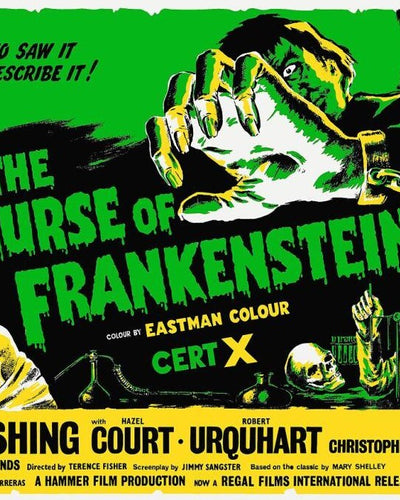
The most consequential friendship-gone-wrong, however, must be that enjoyed and endured by Paul Krempe and Victor Frankenstein in The Curse of Frankenstein. They meet whilst the latter is still a young man who teases his soon-to-be tutor when they first meet, withholding his status as Baron as he (apparently) jests with the older man. The two quickly bond and it’s Paul’s ingenuity in the field of science that allows his pupil to progress so quickly. But this student-teacher period swiftly gives way to something more dynamic, as Frankenstein recalls: ‘My first opinion of Paul was soon confirmed. He turned out to be an admirable tutor. In two years I'd learned all he had to teach, but we went on together probing into the unknown, investigating, recording, searching, always searching, until, gradually, the great sweep of our research began to assume a single direction…’
This stretch of their relationship seems to have been the happiest as both scientists collaborated with a unity of purpose. Their experiments were daring and driven, hopeful and truly collaborative. We’ve quoted her before, but it's worth revisiting Samantha McLaren’s take on the two pioneers, given in Fangoria when she noted, ‘This is not the Frankenstein of Shelley’s book, a man who seems almost totally uninterested in sex; Cushing’s Frankenstein regularly ravishes the maid. Yet it’s Paul he shares small glances with; Paul whose appearances make his face light up… If you rewatch Curse, you’ll notice he can’t keep his hands off his scene partner… a queer audience might well question what other experiments the pair have gotten up to while “probing into the unknown” behind locked doors.’
Whatever the nature of their ‘bromance’ it’s clear the two became close as they pushed back the frontiers of their chosen field. Sadly, one of Frankenstein’s tragic flaws – his colossal egocentricity – prevents him from following Paul’s advice when he begs him to rethink the course of their work.

‘Robert Urquhart and Cushing make marvellous foils for each other...’ – Sci-Fi Bulletin
Frankenstein’s perception of his friend was adroitly captured by John Burke in his novelization of the movie: ‘He was really disappointingly naive. With his bourgeois background, he could, of course, not understand how such matters were arranged in families like ours. Elizabeth would listen to me rather than to him, and she would certainly not leave here.’
Now the Baron’s conceit makes him blind to the validity of Paul’s points, and suddenly the banter they enjoyed during their first meeting begins to look like something more unsavoury… Was Victor joking with Paul when they first met, or toying with him?
Whether Paul was right in his attempts to curtail Frankenstein’s ambition is a question for another day, but it was their friendship that allowed it to be realised in the first place. In the end, however, nothing remains of their amiable alliance. The close of the film shows Frankenstein awaiting execution, bringing their ill-fated story full circle… It began with Paul’s arrival, signifying the start of an exciting new life; it ends with Paul leaving him for the last time - a departure which ostensibly ushers in the Baron’s death by guillotine. As break-ups go, it’s pretty final, although with his brutal rejection of his staunchest friend, it could be argued that Victor had lost his head years earlier…

‘Good old Watson! You are the one fixed point in a changing age.’ - Sherlock Holmes to John Watson, from His Last Bow, by Sir Arthur Conan Doyle.
3. The Famous Friendship:
Sherlock Holmes and John Watson in The Hound of the Baskervilles (1959)
Hammer has depicted its fair share of famous friendships over the years, and one of the most unusual might be the relationship between Van Helsing and Dracula. In The Count’s Last Bow, and the Beauty of Dracula’s Final Scene: Part Two we speculated how the legendary vampire’s death implied a bond between him and his nemesis, beautifully expressed in The Satanic Rites of Dracula (1973). But calling it a friendship might be pushing it, so we’ll turn to more conventional examples!
There’s the sunny fellowship bonding The Men of Sherwood Forest (1954), of course, and in truth, the gloriously mischievous friendship Robin shares with Tuck in Val Guest’s take on the legend of Hood delivers an absolute treat. All badinage and leg pulling, it’s a charming depiction of friendship under fire, and Richard Beckwith as the Friar (‘a joy to watch’ – David Vining) runs with the rich material, so it’s no surprise Hammer contemplated a spin-off that focussed more heavily on his character.

…when you get that camaraderie on film, you’ve really got something!’ – Director Val Guest discussing the production of The Men of Sherwood Forest starring Richard Beckwith (l) and Don Taylor.
But for our third choice we’re turning to one of fiction’s immortal partnerships and plumping for the relationship shared by Sherlock Holmes and John Watson, beautifully conveyed by Peter Cushing and André Morell under the directorial guidance of Terence Fisher in Hammer’s The Hound of the Baskervilles (1959).
What makes it so believable and real is the lack of obvious ‘tells’. Both men look like they’d rather be hurled off the Reichenbach Falls than share a hug, and even in the story’s bleakest moments they’re not going in for any matey chit-chat to keep their spirits up. No, their friendship is evidenced in smaller, more subtle ways. Note the positioning of their chairs when we first meet them in 221b Baker Street, for example. Both pushed around the warming fire, close enough to signal an easy companionship.
And much later, when Watson discovers Holmes has deceived him and has been observing events in Dartmoor for days, he immediately accepts his old friend’s methods and resists the urge to berate him.

In the short story, The Adventure of the Three Garridebs, Holmes shows immense concern for Watson when he fears he could be badly injured. This display causes his old friend to reflect, ‘It was worth a wound—it was worth many wounds—to know the depth of loyalty and love which lay behind that cold mask.’
Contrast the corresponding scene and in particular, the reaction of Morell’s Watson to Nigel Bruce’s iteration in the first film to star Basil Rathbone as Conan Doyle’s hero. When the good doctor learns the truth of Holmes’s subterfuge in The Hound of the Baskervilles (1939) he’s livid! He rages that the ploy was, ‘A shabby trick! And one I’ll not forget!’ But in Hammer’s version of the tale, the couple’s friendship prevents any such anger. The reunion astonishes Watson, but even before the situation is explained he’s more interested in learning what Holmes has discovered during his illicit stay on the moors. There’s a brief moment of chagrin (‘I think you might have told me what you intended to do…’) but it’s fleeting and feels more like disappointment than resentment.
And besides, look at the affection in Holmes’ face as he’s reunited with his partner in crime-solving. The cold ‘thinking machine’ has never been warmer as he rests a hand on his comrade’s shoulder. ‘It’s good to see you again, Watson,’ he declares, before admitting with uncharacteristic emotion, ‘It’s been rather lonely up here.’

The cast of Hammer’s Man About the House. The couple in front are (of course!) the iconic George and Mildred, played by Brian Murphy and Yootha Joyce. Behind them (l-r) we see Chrissy (played by Paula Wilcox), Robin (Richard O'Sullivan) and Jo (Sally Thomsett).
But perhaps the exchange that best captures their friendship comes when Sr Henry meets them both for the first time in his London hotel rooms. He immediately bawls them out for failing to find his missing boot, and his vigorous reprimands clearly confuse the two new arrivals. But when Sir Henry says, ‘You’re the manager…’ the penny drops and Holmes and Watson share a fabulous look of joint amusement. It only lasts a second but indicates the two are on the same wavelength and can secretly celebrate the absurdity of the situation.
The exchange isn’t ‘punched home’ by Fisher, Cushing or Morell. It’s simply natural and unforced – just like most great friendships, and forms one more reason why the Baker Street boys make our top three.
We’ll perhaps return to celebrate more relationships in future… The easy and relatable friendships we see amongst the women who work in Christophe’s, the Bond Street boutique depicted in Death in High Heels (1941), is surely ripe for discussion, and how could we have excluded those loveable goofballs, Chrissy, Jo and Robin from Man About the House (1974)?
But for now, we hope you’ve enjoyed this celebration and the reminder that the House of Hammer is not just about fiends, it’s also a place for friends… Happy International Day of Friendship!
Of the movies mentioned above, Four Sided Triangle (1953), The Curse of Frankenstein and The Men of Sherwood Forest are all available as part of Hammer’s Limited Collector's Edition range, and if you’re interested in The Lady Vanishes, check out The Forgotten Faces of Hammer: Cybill Shepherd - Part One and Part Two. And finally, if you want to get the inside story of Victor Frankenstein and Paul Krempe you can read our exclusive interview, A Q&A with Baron Victor Frankenstein.