

- Article
Dracula: The Script, the Score and so much more
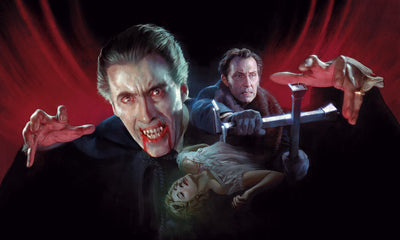
There’s never been a better time to be a fan of Dracula (1958). You’ll soon be able to experience director Terence Fisher’s original vision of the film, restored in 4K, at home and on the big screen, with the Limited Collector’s edition offering a truly sumptuous range of additional material. And there’s more great news for anyone who’s ever enjoyed Hammer’s gothic masterpiece. A remarkable new scriptbook and James Bernard’s original score are just two world firsts which ensure that the ever expanding ‘Dracula Collection’ could bring a smile to even the Count’s customarily saturnine face.
The Dracula Scriptbook offers a fascinating insight into the origins and development of the movie that triggered a sea change in the world of horror. It contains the screenplay, as written by Jimmy Sangster, that was issued early in the production process and therefore the narrative and dialogue, and by extension the characters who inhabit this version of Dracula’s world, differ markedly from the various ‘finished’ iterations that have captivated audiences for over 65 years.
So, to be clear, this is something more than the screenplay for Dracula as it finally emerged in the spring of 1958. Dated 18 October 1957, this shooting script was issued three weeks before filming commenced and as such it represents Hammer’s early intent as their filmmakers edged towards the work as we know it today.

The death of Lucy (Carol Marsh - above) as depicted in Sangster’s script of October, 1957, would change significantly for the actual film. It’s one of many alterations peppered throughout the finished work.
To quote the notes that Steve Rogers has written for this publication:
‘…to fans and film scholars it is, obviously, the draft and production scripts that are of most interest. These show the original intention before any footage had been filmed and the way that the script was shaped during filming, giving the exciting opportunity to see many roads not taken… To people making these films this is just part of the creative process but, to us, now, looking back, this situation allows us to indulge in cultural archaeology by examining these strata, the changes within them and the decisions that informed those changes.’
The Dracula Scriptbook reveals an absorbing blueprint, allowing readers to pore over the modifications and alterations that were implemented as the production progressed. But it’s more than a deep dive into the evolution of a classic. The sole copy of this version of the screenplay that’s known to exist was the one issued to Christopher Lee himself. This new scriptbook details the surprising story of how it made it from the star’s possession to publication, but the survival of this particular copy has proven doubly fortuitous as it contains Lee’s own marginalia – the handwritten notes he scribbled on the pages as he worked through them. These are reproduced in full, giving us a glimpse into the thoughts of the man who brought Dracula to life.

The scribbled notes of Christopher Lee (above) across Sangster’s early script offer fascinating insights into his perception of Dracula.
Aside from the script itself, notes from Steve Roberts and Christopher Lee’s marginalia, the scriptbook contains the landmark analysis of Dracula that first appeared in the final issue of Photon. Written by Ron Borst, it’s been described as ‘an article’, but clocking in at just over 15,000 words it’s considerably meatier and more comprehensive than the phrase would suggest.
In fact it’s a marvellous work – evocative, authoritative and exhaustively researched. The acknowledgements open with the line, ‘I wish to thank Christopher Lee, Jimmy Sangster and Terence Fisher for their individual kindnesses in permitting themselves to be interviewed at length…’ which tells you everything you need to know about how Borst put the piece together. It’s eminently readable and with its direct references to Dracula’s shooting script, the perfect accompaniment to Sangster’s screenplay.
There’s also a gem of a feature by the multi-awarding-winning screenwriter, John Logan, which documents his meeting with Christopher Lee when they worked together on Hugo (2011). It’s got all the humour you’d expect from an item entitled, Taste the Blood of the Scars of the Satanic and Risen Prince of Darkness!, but Logan’s recollections of their conversations and Lee’s kindness make for a heartwarming and informative take on the legendary actor.
There’s also the story treatment for the related (unmade) Hammer movie, Victim of his Imagination, plus a look at the differences between the shooting script and the finished version of Dracula, written by Jonathan Rigby.
Fans may be aware this will be the second in Hammer’s Scriptbook range, and you can find out more about the new line by revisiting our Q&A that accompanied its launch back in August. The interview details the aims of the books, how they originated and what readers can expect from future releases. The first Scriptbook includes two versions of the screenplay for one of the most famous horror flicks never made, The Unquenchable Thirst of Dracula, as well some work-in-progress pages penned by its writer, Tony Hinds, and two brand-new essays. For more info about the Scriptbooks, or to place a pre-order, simply visit Hammer’s online store.

Artwork for The Unquenchable Thirst of Dracula Scriptbook. Planned as one of the sequels to Dracula, the film would have seen Christopher Lee as the eponymous vampire, stalking his intended prey through the streets of India.
And if you’re looking for something to enjoy whilst perusing your copy of the Dracula screenplay, we’ve got you covered…
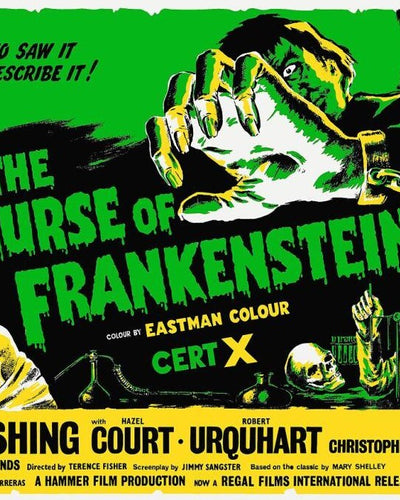
Earlier this year Hammer launched an ambitious range that sees a wide selection of soundtracks released on vinyl, allowing the original music of its classic movies to be enjoyed afresh – in some cases reevaluated, and in others, discovered in their ‘purer’ form for the very first time. Working with Silva Screen has ensured the soundtracks can be savoured in the best possible quality, and scores from The Curse of Frankenstein (1957), Shatter (1974) and Captain Kronos: Vampire Hunter (1974) led the charge.

The Limited Edition Vinyl Soundtrack range launched with The Curse of Frankenstein (above). As with the imminent Dracula release, this double 7" from Hammer Films featured the stirring music of composer James Bernard.
We’re thrilled to confirm the next title in the range will be, of course, Dracula. It’s no secret that the film’s music helped cement its place in the pantheon of horror greats, unleashing a bold, distinctive, hugely evocative score that still works beautifully. Hammer’s Steve Rogers recently called it, ‘…a dynamic and sensually-propulsive score that is not only the key engine driving the narrative’s frenetic pace but also a masterclass in emotional cueing through music.’
Reviewer Annie Kapur was also impressed: ‘The music is incredible… it also adds to the atmosphere but then there’s this terrifying music every time Dracula is approaching…’ It’s a view shared by many fans. A Nerd Called Ryan hailed Dracula, ‘One of the best horror movies of all time!’ adding, ‘…James Bernard, who composed the score, does a brilliant job [with his] creepy, really Gothic, dramatic score that really, really works brilliantly.’
None of the original session tapes or other elements of the score in isolation have survived, and so, as the notes to the release point out, ‘…each music cue had to be processed manually, removing sound effects where possible and extracting and remixing sections of music cues where it wasn't.’

‘When Hammer made their first great success back in the 50s, I doubt whether anyone in England (except filmmakers) ever thought about soundtracks…’ – James Bernard, in conversation with John Mansell (from a 1992 edition of Soundtrack Magazine).
The result is approximately 20 minutes of Bernard’s score that’s been assiduously cleaned up, ‘…to remove hiss, clicks, crackle and other artefacts that were baked into the source audio.’
It’s the first time this original music has been released, and it serves to highlight the contribution of James Bernard, both to Dracula and to Hammer throughout this extraordinary era during the 50s. As author Benjamin Welton stated in The Music of James Bernard: Monster Virtuoso, ‘Even though he had been scoring films since the mid-1950s… it took Horror of Dracula to give the world its first full taste of Bernard’s genius… This music is loud and full; it’s a far cry from the more minimal or popular approaches that characterize much of today’s horror films… Lee’s laconic Dracula is contrasted by a soundtrack that exudes all the explosive energy of Stravinsky’s The Rite of Spring. This allusion to high culture is not done in jest or to be provocative; Bernard’s Hammer scores are really that good.’
With its striking packaging and extensive notes, this release of Dracula’s original, iconic music represents a timely addition to the range of Limited Edition vinyl LP soundtracks. But there are even more treasures to unearth that celebrate Christopher Lee’s definitive portrayal of the Prince of Darkness…

Van Helsing models the latest release from Hammer…
If you fancy owning a notebook just like the eye-catching tome used by Jonathan Harker in Dracula, here’s your chance. This screen-accurate reproduction of the famous notebook contains 200 blank pages for your sketches, to-do lists, random thoughts and details regarding any encounters you’ve had with vampires you’re pretending to work for. Faithfully replicated with lush red covers and JH’s gold debossed emblem, it’s a terrific nod to the movie and although it doesn’t say Dracula on it, if you know, you know…
Best of all, you won’t even have to travel to Klausenburg to ask Inge if she knows where you can find one. Just visit The Dracula Collection at Hammer’s online shop and you can pre-order your copy now.
Whilst there you can also check out an array of other Dracula merch including limited edition quad posters, t-shirts and a cap featuring the distinctive D from the film’s on-screen titles, embroidered in stylish black-on-black stitching. And we can verify that rumours the apparel has been manufactured by companies belonging to D. D. Denham are entirely unfounded…

The vintage Dracula poster above has been painstakingly reproduced and comes with an official certificate of authenticity.
All these products, from the scriptbook with its unique inclusion of Christopher Lee’s own notes, to the reproduction of the original poster promoting Dracula in the UK, are intended to open up the Hammer archives and give fans access to aspects of your favourite films. And aside from all these items (which we hope you’ll love!) you can sign up for our free newsletter, a must-see bulletin that not only keeps you up to date with all things Hammer, but brings you glorious photography from classic movies, fun facts and links to free videos. You can also get involved by following on Instagram, Facebook, TikTok and YouTube – links at the foot of this page.
Plus, every week on this blog you’ll find brand new features including Q&As with insiders, articles on upcoming releases and in-depth items on all elements of Hammer, including its earliest days, most memorable villains and brightest stars.
We can’t wait for you to witness the phenomenon that is Terence Fisher’s vision of Dracula, magnificently restored in 4K. But that’s just part of the rich world of Hammer which continues to thrive, evolve and deliver timeless entertainment. So if you’re a fan of the undead, well, what a time to be alive!
The Dracula Scriptbook and the vinyl, limited edition LP of music from the movie are both available to pre-order now. You can also find more information about all the Dracula-related releases mentioned above within Hammer’s extensive Dracula Collection.