

- Article
Coming Soon: The Abominable Snowman… Plus 5 Things We Think You’ll Love About It
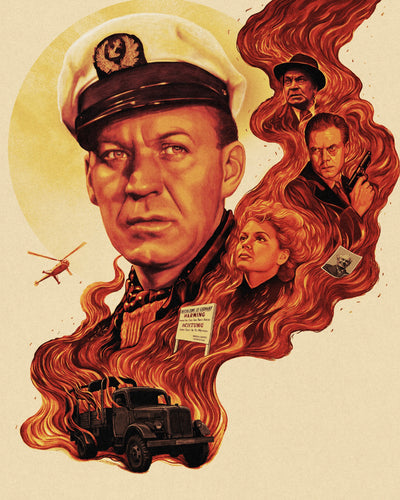
We're delighted to confirm that the next film to be restored and released as part of the ongoing Limited Collector's Edition range is The Abominable Snowman (1957). A stone cold classic (quite literally!) It stars Peter Cushing, was directed by Val Guest and written by the man behind Quatermass – the great Nigel Kneale.
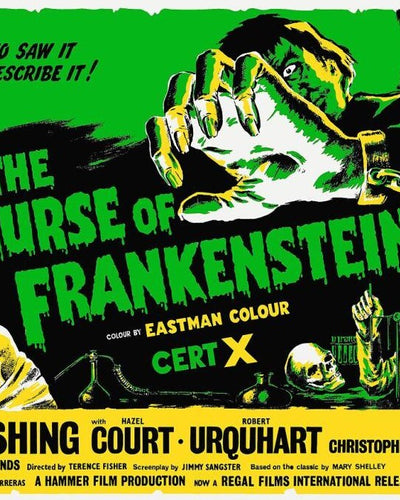
The Abominable Snowman is a Hammer horror from the late 50s, but it eschews the gothic qualities of pictures like The Curse of Frankenstein (1957) and Dracula (1958), emerging as a thought-provoking work of unsettling beauty. It's the tale of a Himalayan expedition led by two strikingly different men – the charismatic and thoughtful Doctor Rollason (Peter Cushing) and his bullish, no-nonsense colleague, Tom Friend (Forrest Tucker). As they search for the Yeti they clash over everything from what the species could represent, to the ethics of their hunt. But as their companions start getting picked off one-by-one, it seems these apparently academic arguments may be the least of their worries…
This new release includes two iterations of the movie. You'll find the widescreen UK theatrical version as well as the widescreen US theatrical version which was re-titled The Abominable Snowman of the Himalayas for Stateside audiences. A mountain of additional material includes two new commentaries plus an archive commentary featuring Nigel Kneale, Val Guest and Hammer expert Marcus Hearn. There's a new audio essay on 'big monsters' in film by celluloid cryptid expert Stephen R. Bissette, a new documentary on the making of The Abominable Snowman and one covering the lost TV drama, The Creature, upon which this Hammer movie was based.
Believe us when they say there is much, much more with this release, including an accompanying booklet packed with contributions from the likes of Andrew Pixley, Sarah Morgan and Wayne Kinsey. You'll find more information on The Abominable Snowman's pre-order page.
When the film was first released the public seemed uncertain of its appeal until strong word-of-mouth and glowing critical appraisals ultimately ensured it was a hit. But the staggering success of The Curse of Frankenstein and Dracula took Hammer in a different direction and this production soon became the archetypal 'overlooked classic'.
In an attempt to nudge aside the word 'overlooked' and to mark its release in 4K, we're highlighting five things about the movie which we feel makes it a very special work. Some are obvious selections whilst others are (hopefully!) a little more unexpected and a quick warning - spoilers ahead!
So, figuratively speaking, don your climbing boots and strap on your goggles as we go in search of 5 things to relish about The Abominable Snowman…

Rollason (Cushing - left) and Friend (Tucker) are not happy campers… The Abominable Snowman was the latter's final film for Hammer, but he soon returned to the horror genre, playing the lead role of Alan Brooks in another mountain-based movie, The Trollenberg Terror (1958).
ONE: Run, Forrest, run!
Everyone knows Peter Cushing is brilliant. Reprising his role of Doctor Rollason from the TV original, The Creature, the actor who soon after became synonymous with Hammer again shows why he was perfect for the genre he tended to call 'fantasy'.
But it's worth giving Forrest Tucker credit for his performance as Friend. For the film to work we need to see the contrasts between his character and Rollason's, not simply for immediate dramatic conflict, but to disguise the similarities of imperfection, such as greed and selfishness, that the two men share. Tucker understands this and provides a performance that feels like a mirror of Cushing's. As Dark Corners Reviews put it, '…the actors have great antagonistic chemistry that animates the film.'
Apocalypse Later makes another great point: 'Even if Tom Friend is on the wrong side of this morality play, Forrest Tucker sells it well. It's hard to beat Peter Cushing in material like this and he doesn't, but he does a good job and I don't believe the film would have worked without his contrasting performance to create the alternatives in our minds.'
Rollason is questioning, curious and ostensibly careful. Friend believes he already has all the answers and only needs a Yeti as a mere commodity. He dismisses other viewpoints and takes chances like a stubborn gambler at a roulette table, desperate to prove his system works despite a dwindling reserve of chips. Tucker captures and conveys all this beautifully; a mass of impatience and over-confidence, barrelling across the Himalayan ledges as if he's hurrying along Wall Street in the New York rush hour. He pretends to listen to others, like a psychopath feigning concern for a victim, but the pretence is a thin one, given out of habit as opposed to genuine consideration. Tucker conveys all this with a bruised naturalness and when, for literally a second, the mask slips and he shows in his facial expression a touch of guilt for the way he's willing to sacrifice his old pal, Shelley, it registers as one of the movie's emotional high points.

Forrest Tucker, seen here with Eva Bartok, in Hammer's cold war crime thriller, Break in the Circle (1955).
At around its half-hour mark we're given an insight into Friend's background when he tells Rollason, 'Look, I'm not exactly a 'golden character', doc. After the war, I did a little smuggling around the coast of Europe… odd gun for the angry little countries… I lived on two of the basic drives of humanity. Fear and hunger. When they began to dry up one I looked around for another one…'
There's a rugged nobility to his account. An honesty and a suggestion of a belief system. The dialogue could have been delivered with a gravitas, or almost as though it was a soliloquy of self-reassurance. Instead Tucker gives it as a series of well-worn facts. In Friend's mind the confession amounts to an unarguable tract. Nothing more. This brief exchange offers a fabulous break from the immediate quest, and Tucker makes us believe every syllable of it.
If Tom Friend captures a monkey that's obviously a monkey, but it suits him to declare it's a Yeti, it takes all of Rollason's blunt, yelling insistence ('…you'll find one in half the zoos in the world!') to make him concede… It's a monkey. So, when his hardened shell finally begins to crack, that fracturing is at once awful and intriguing to witness. It's a peach of a role for Forrest Tucker and fair play to the American star – he runs with it.

Text: Peter Cushing (foreground) had previously played Rollason in the BBC drama, The Creature. Clifford Davis, writing for the Daily Mirror, described that production as '…gripping stuff and, for this viewer, packed with terror.'
TWO: Oh, what an atmosphere…
It's impossible to discuss The Abominable Snowman without considering one of its most outstanding qualities, but one which is most difficult to articulate – the atmosphere of the film. Enigmatic, unsettling and other worldly. Countless reviews of the work loop back to a single word: 'eerie'. And although that's a perfect descriptor for The Abominable Snowman, it's not eerie in the sense that movies such as Frankenstein (1931), The Old Dark House (1932) or even Dracula (1958) can claim to be. In those pictures, and with other disquieting stories, we know, as an audience, what we're 'supposed' to be fearful of, as a lumbering creature is brought to life, or a killer stalks a spooky old pile in a storm, or an evil, supernatural force begins to enact a ghastly plan.
Here we're faced not just with the unknown, but the unknowable. The Yeti that Rollason and Friend are seeking cannot be understood because it's so far removed from our frame of reference. It's a monster, it's a warning, it's an illusion. At once a beacon of hope, and a harbinger of doom. Both a holy grail and a force to be avoided at all costs.
And although this overview of what the creature represents may sound like a string of contradictions it's exactly that paradox which gives the drama real, visceral bite. Rollason and Friend don't know what they're up against, and although that situation has provided the premise for the countless horrors, it's the complete unknown quality of the Yeti that raises the stakes to a point where everything the explorers have ever understood is threatened.
At the outset the central characters (and by extension, the audience) have no inkling of the hunt's implications. The gradual realisation of their own ignorance and the immense, very real danger it places them in, becomes fascinating to watch and forms a primary reason why the counter-intuitive elements of the final scene were the only way this tale could have concluded.
The atmosphere is heightened by superb location work, some of the best sets that Hammer ever created and, of course, Nigel Knerale's script which builds tension and mystery, but never at the expense of a dynamic storyline. But more of that later…
There are plenty of standout moments in The Abominable Snowman, but after the end credits fade and we leave the Himalayas, it's likely to be the feel of the film that remains with you. Pervasive, beyond knowing and yes, here's that word again, downright eerie.

'Thoughtful fictional treatments of Bigfoot and the Yeti are as rare as sightings of the creatures themselves. The most thoughtful, intelligent treatment of all is Hammer's The Abominable Snowman (1957). This elegant black-and-white production… [is] worth a look for its unusually intelligent use of science fiction to comment on the human condition.' - Brian Schuck in Films From Beyond the Time Barrier.
THREE: The Abominable Man
Hammer has always had a knack for subverting expectations of a 'monster'. The figure in the shadows which doesn't resemble us physically might spark terror and cause the audience to scream, but it's often the man facing it whom we should really watch out for…
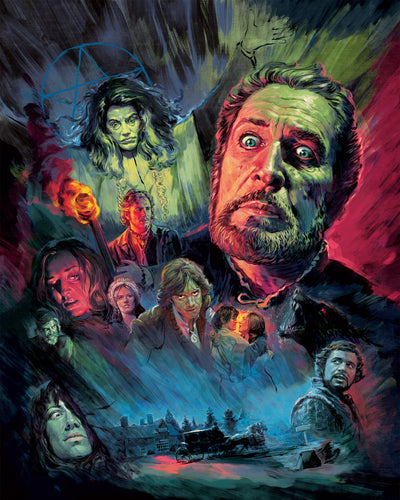
The Curse of Frankenstein is an obvious example, and the eponymous scientist, viewed objectively, can be deemed a more monstrous figure than the 'monster' he brings to life. Similarly, in The Curse of the Werewolf (1961) the notion of the savage, supernatural lycanthrope remains intact, but the real animals are those around the shapeshifting Leon Corledo. Those men and women who hunt in packs, devoid of compassion and understanding for the blighted young labourer who only ever craved a 'normal' life – they are the real curse.
Nigel Kneale was a master of this inversion, and when, in Quatermass and the Pit (1967), Barbara states, 'We are the Martians, now…' it can be viewed as his most overt suggestion that mankind represents the monsters, not the 'insects' that the bigwigs are appalled may have been responsible for 'our human condition'.
In The Abominable Snowman Kneale ensures we see this theme play out on the icy upper reaches of the Himalayas. What makes it so effective here is the nuances at play and the erosion of our faith in a character like Friend. At times we can relate to his view of a changing world, without ever warming to him as an individual. But when stripped of his words and left to be judged by his actions alone, it's clear he's the most abominable thing about the expedition. Similarly, Doctor Rollason, although personable and ostensibly honourable, can be viewed as a selfish interloper. He may not regard himself as a hunter, but the Yeti is as much a prey to him as it is to the more obviously mercenary Friend. The Llama recognises this from the start, and when he shows Rollason his understanding, the doctor chooses to repress and not address the issue. It's a decision that has disastrous consequences.
Kneale is too much of a pro to serve up a simple 'man = bad, creature = good' equation, and the question of moral diktats subtly underscores the narrative. It forms an intriguing part of the film's fabric, keeping the audience off-balance and finally, it proves instrumental in delivering the story's final, memorable twist…

Richard Wattis (right) with Paul Henreid in Hammer's Stolen Face. The New York Times described the typical Wattis character as being a figure, '…who sought to maintain dignity in the middle of chaos while managing to convey a sense of outrage with a glance above the rims of his spectacles.'
FOUR: Wednesbury's Child
In a film that's populated with so many serious and intense characters, the presence of Richard Wattis as Peter Fox provides a grounding presence that affords the adventure a measure of relatability. He's our man in the Himalayas, simply trying to get through the daily challenges that confront him. Whilst others are wrestling with the nature of mankind and the meaning of the Yeti in relation to humanity's future, dear old 'Foxy' is worried about how he'll get out of drinking a cup of tea without appearing rude. ('Well, really, I quite like it cold,' he assures his host as he momentarily excuses himself.)
He's polite about the culture he's visiting and seems to be a thoughtful chap, although he also emerges as something of a comic figure, buzzing around the monastery in a suit and faintly preposterous cricket jumper. Awkward yet game, he's identifiable to anyone who's been respectful but out of their depth whilst visiting a vivid and unique environment.
Although he sails close to caricature on occasion, Kneale ensures he does enough to avoid the tag, unafraid to voice his own opinions when they go against Friend's, and lending Helen his wholehearted support when she feels her husband needs assistance. Fox may feel like a throwaway character, but without him the film would have less heart, less likability and considerably fewer light touches.

In a monastery garden… (l-r) Maureen Connell as Helen Rollason, Richard Wattis as Peter Fox and Peter Cushing as Doctor Rollason.
Wattis was born Richard Cameron Wattis in Wednesbury, Staffordshire, England on 25 February, 1912, and knew from an early age that the actor's life was for him. He recalled that as a child, 'I was always dressing up and all of that sort of thing… And I wrote my first play when I was 6.' His parents didn't actively discourage him from his chosen career path, although they were wary ('They thought I wouldn't stand the rough and tumble of the theatre!') and after a few false starts in other jobs he wrote to the hugely respected actor, Robert Donat, who was kind enough to reply. They met and although the established thespian voiced concern that Wattis would find parts difficult to come by, his wife was instrumental in securing the young hopeful a kind of stage apprenticeship which served as a useful way into the industry.
Reports vary regarding Wattis's first 'proper' theatrical engagement but during a 1964 edition of Desert Island Discs he himself recalled he'd begun by joining a rep company and his first appearance with them had been at the Theatre Royal Brighton. After leaving that outfit he went into a production of Cyrano before trying his hand at as a producer. The switch proved unsuccessful and he returned to acting, although the outbreak of war curtailed his career and in the mid-40s he suffered what he termed, 'a nervous breakdown'.
Refusing to be beaten he returned to playing minor roles in the provinces before reaching the West End and ultimately carving out a film career, 'Much to my astonishment,' as he told his Desert Island interviewer, Roy Plomley. A character actor specialising in playing well-meaning but bureaucratic 'stuffed shirts', his most famous movies include The Happiest Days of Your Life (1950) which he considered his big break, The Inn of the Sixth Happiness (1958), Carry On Spying (1964), Chitty Chitty Bang Bang (1968) and The Colditz Story (1955) which he cited as one of his favourite productions.

Tom Conway (centre) with Mila Parély and Richard Wattis in a scene from Hammer's Blood Orange.
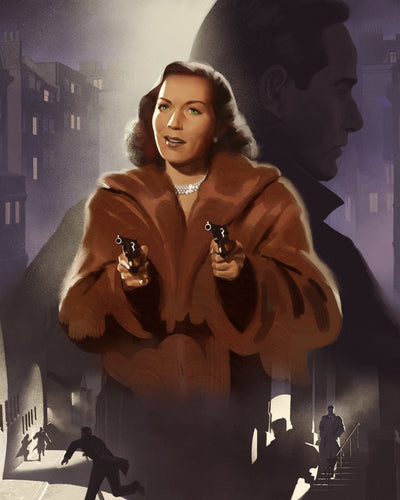
Aside from The Abominable Snowman he featured in several Hammer productions including Stolen Face (1952) and Blood Orange (1953) where he landed the relatively meaty role of Detective Inspector MacLeod, a by-the-book (of course!) copper who helps Tom Conway get to the bottom of the crimes perpetrated at the House of Pascall.
In later years he moved increasingly into television work and today he's probably best known for playing Charles Fulbright-Brown in the BBC's long-running hit, Sykes. Watching his outtakes from the shooting of that sitcom is a revelation. We see the humourless and officious 'known' figure become something akin to a naughty schoolboy, corpsing when he fluffs a line and cracking up over a gag about a 'dodgy donut'. It's an impish side to his personality, and one which shines so sweetly in The Abominable Snowman.

Some US marketing material for the film carried a 'Public Notice' urging potential audience members to, 'Take shock endurance tests in our lobby to determine if you dare see this picture!'
FIVE: And… action!
Reviewer Ryan Harvey called The Abominable Snowman, 'a restrained and cerebral movie', and The Movie Screen Scene opined, '…the script contains more intelligent ideas than most of the science-fiction movies of the 1950s.' Both comments ring true and definitely encapsulate one widespread critical take on the movie, but additionally, part of the effectiveness of the work lies in ability to blend philosophical and ethical questions with out-and-out action and adventure.
Let's not forget the script was written by Nigel Kneale who was no slouch in his ability to present big themes, moral dilemmas and thoughtful 'what-ifs' whilst ratcheting up the tension and providing enough physical drama to keep everyone in the auditorium happy. The instance which might spring to many readers' minds will be Quatermass and the Pit, but it's a trick he pulls off in other works ranging from First Men in the Moon (1964) to the 1995 TVM, Sharpe's Gold.
In The Abominable Snowman the hunters become the hunted and face trials ranging from murderous Himalayan storms to Yeti attacks. There are guns and fights and plenty of physical jeopardy to guarantee this is no thoughtful stroll through the mountainsides.
But let's give (almost) the last word to Horror Cult Films which summed up our final point and several others we touched on, when it concluded, 'The Abominable Snowman is, overall, an overlooked minor classic which successfully merges the cerebral monster movie with the more conventional kind...while still never forgetting to be entertaining.'
Or to put it even more succinctly, as Aaron Edgell noted when writing for Classic-Horror, 'If you are looking for some truly classic horror and a good adventure tale to boot, you can't do much better than this.'
The Abominable Snowman is available to pre-order now.
And of the films mentioned above, Break in the Circle, Stolen Face and Blood Orange are all part of the Limited Collector's Edition Range, whilst Quatermass and the Pit is also available. Finally, Nigel Kneale fans can check out more of his works in Hammer's comprehensive Quatermass Collection which includes the first two Quatermass movies, booklets, merch and much more!