

- Article
Coming Soon: Break in the Circle
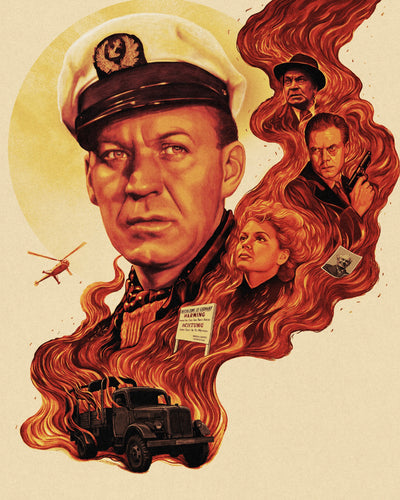
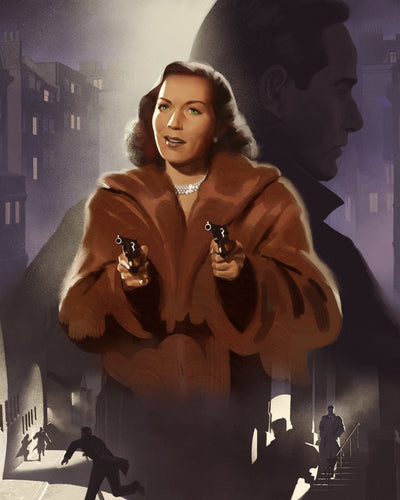
If you enjoy thrillers full of action, twists, cold war intrigue and just a dash of dangerous romance, this one’s for you… We’re excited to confirm that the next title to be restored and released as part of Hammer’s Limited Collector’s Edition range will be Break in the Circle (1955), a big budget, colour feature shot on location in Hamburg, London and Cornwall, and directed by the masterful Val Guest.
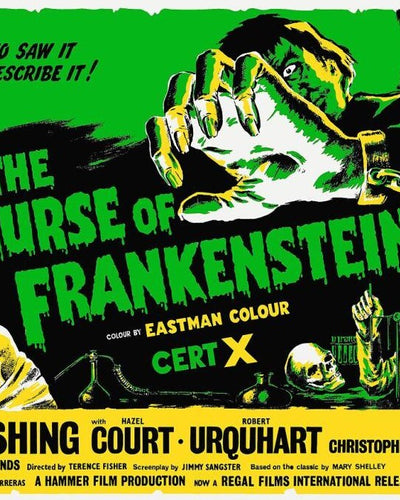
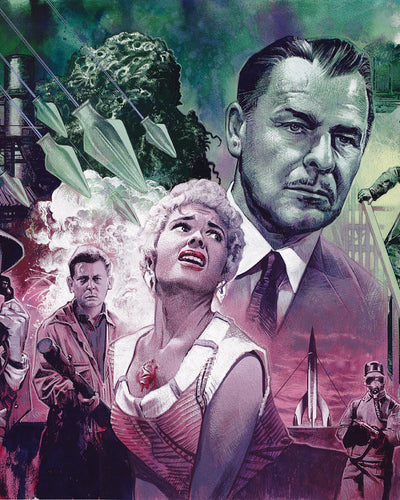
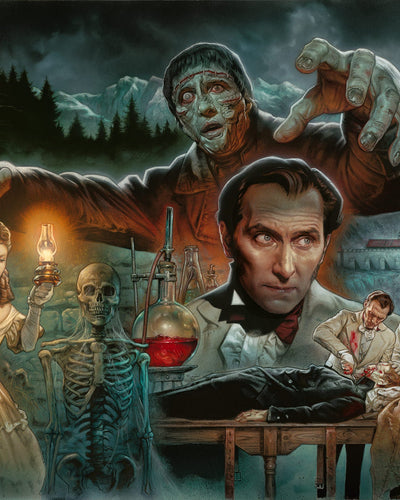
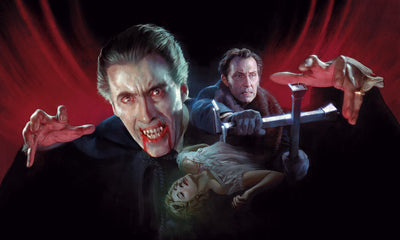
In recent months Hammer has delivered big on horror with the classic X the Unknown (1956) and Murders in the Rue Morgue (1971) both available to pre-order, along with The Hammer Horror Omnibus: Volumes 1 & 2 and a ground-breaking new series that launched with The House of Hammer: Volume 1. But as regular readers know, Hammer is all about embracing and showcasing its legacy right across the genres, and Break in the Circle stands as a fine example of the superb action/adventure movies the studio was producing before its gothics.
At the time, The Kinematograph Weekly called the film, ‘Intriguing and exciting’, Picture Show hailed it an ‘Exciting drama… Well acted and told…’ whilst Picturegoer praised its outstanding cast: ‘Eva Bartok is delightfully provocative as the heroine and Forrest Tucker is first-rate.’ For a modern take, and to get all the information both on the movie itself and the overall release, (plus brief updates on other Hammer projects) we spoke to Hammer’s man in the know, Steve Rogers…

Location work along the Thames (in this instance, SW1), traps a long-gone London in cinematic amber.
Hammer News: In time honoured fashion, for anyone who’s unaware of Break in the Circle, can you explain what the movie is about?
Steve Rogers: A buccaneering ship’s captain is paid by a devious tycoon to smuggle an on-the-run scientist out of Hamburg. With Eastern bloc agents in hot pursuit and a Special Branch mole watching his every move, can this plucky ne’er-do-well survive with his skin intact?
HN: You’ve made me want to watch it again! Would you call it a Cold War thriller?
SR: In part. It was made during the mid 1950s so it can’t help but be influenced by the Cold War – but I’d argue that, as most everyone’s motive in this film is criminal, that this is more Eurocrime than anything else.
HN: With that in mind… Hammer was doing a lot of Brit noir in the 50s, and although this strays close to it, it feels more action/adventure orientated - yet it remains a serious espionage picture. Is that fair comment?
SR: Hammer were evolving. Their output deal with Robert Lippert was coming to an end and they were in a position where the audience for noir was waning and they were looking for the next big trend to latch on to – and a trend that was on the rise was European-filmed productions starring American talent. So they rolled the dice and made one themselves – while hedging their bets with a film version of a TV series and a run of short films and musicals.

Although this poster keeps the ‘standard’ billing, in some countries, such as Italy, marketing material gave Eva Bartok’s name the topline, an indication of her fame and appeal during the 50s.
HN: Following on from that, I’m obviously not suggesting the 007 franchise wouldn’t have happened without Break in the Circle, but it seems like a film that links the Boy’s Own style of UK productions like The 39 Steps (1935) and Night Train to Munich (1940) to the early Bond movies, most obviously From Russia with Love (1963). I’d love to get your thoughts on that.
SR: It’s a two-fisted Boy’s Own style, certainly, and alongside the examples you’ve mentioned you can also throw in Bulldog Drummond and others of that stripe. The key detectives of films being made at that time – The Saint, The Falcon, Sherlock Holmes and so on – were more cerebral, but Skip Morgan is the sort of guy who would rather punch Moriarty on the nose than waste time trying to out-think him.
HN: Ha! Hey, any Hammer production that Val Guest was at the helm for is always worth watching. What directorial touches does he bring to this movie?
SR: Guest’s direction grounds the performances as well as the film itself. Bearing in mind that this is a guy who used to write for comedian Will Hay and directed Hammer comedy Life With the Lyons, Guest’s tight control of this film’s look and feel shows why he was chosen to subsequently direct Quatermass (which started filming pretty much straight after this one had wrapped). It’s not as cinema verité as Quatermass was, but you can see that Guest was workshopping some of the same ideas here.

Forrest Tucker (left) with Eric Pohlmann. Val Guest took full advantage of the shoot in Germany, delivering quietly impactful shots such as this moment where Morgan realises he’s in a world of trouble…
HN: Some Hammer films of this era were achieved on a challenging budget, but in terms of spend, Break in the Circle pushes the boat out. Could you explain why this was, and how it shows onscreen?
SR: This was not a cheap film to make but Hammer obviously thought it worth the risk. For several years they had enjoyed unparalleled access to the US market via their Lippert deal, so the hunt was on to find a format and a style that would allow Hammer management to land another US partner for their films. So this is Hammer making a risk-vs-reward calculation and figuring that it was worth the expense of colour, (relatively) exotic locations, helicopter chases and so on.
HN: We were chatting about this thriller a few weeks ago and you called it, ‘the Road Not Taken for Hammer’. I wonder if you could expand on that for us…
SR: Hammer had made a slew of Brit noir crime films – and made them well. Thematically, Eurocrime was the next evolution and they invested heavily in the film’s success. By contrast, The Quatermass Xperiment (which followed Break in the Circle in production) was filmed in black and white and never went much further than the Home Counties.
Break in the Circle was an extended shoot (in colour) filmed in Polperro, Cornwall, and in Hamburg. It doesn’t take a genius to see which horse the Hammer management were backing for the chance of a seat at the big boys’ table. Break in the Circle did very well financially according to contemporary reports, but Quatermass surprised everyone by blowing the doors off and Hammer immediately turned their main focus onto horror. If that hadn’t happened then Hammer would undoubtedly have done more European-set crime thrillers. A sequel to Break in the Circle was mentioned in the press, but it never happened.
So, even though this film is a rarity that most Hammer fans have never heard of, it is, if taken alongside Quatermass, a nexus point – a Sliding Doors moment. In an alternative universe Hammer made more of Skip Morgan’s European adventures, revived Dick Barton and had successful runs of films featuring Sexton Blake and Richard Hannay. In our own universe, however, it’s a footnote – though it is, in truth, the missing link between Hammer’s run of acclaimed Brit noirs that preceded it and Jimmy Sangster’s run of European-set, gaslighting "mini-Hitchcocks" that were to follow. I’d argue it’s one of Hammer’s most important films – not for what it was but for what it brought about.

Eva Bartok with Guy Middleton. The latter spent years working in the London Stock Exchange during his 20s, before treading the boards and soon starring in movies such as Keep Fit (1937) and 29 Acacia Avenue (1945).
HN: It also boasts a terrific cast. Let’s start with the fabulous Eva Bartok. She gets a much meatier, more interesting role than she had in Spaceways (1953), doesn’t she?
SR: Eva certainly gets a more significant role this time round. She’s still the love interest but she’s also spirited and feisty – her European exoticism being a key factor in the plot. She even gets to rescue the hero at one point so, yes, a bit more interesting than the lovesick scientist she played in Spaceways.
HN: Forrest Tucker plays the male lead. He was huge back then, but I suspect these days he’s best remembered for his appearance on Columbo (in 1972’s Blueprint for Murder) and possibly Sands of Iwo Jima (1949). What sort of an actor was he, and what does he bring to his role here?
SR: Tucker was very much cut from the same cloth as Brian Donlevy – a no-nonsense actor who specialised in bull-headed, often two-fisted, characters. Also, as with Donlevy, Tucker was equally adept at portraying hero or villain while still ostensibly acting out the same character traits. In Break in the Circle he plays a criminal, though he’s not a bad man (at least, there are badder people than him in the story). When he returned to Hammer two years later for The Abominable Snowman, the coin was flipped and he played a nasty piece of work.

Forrest Tucker (left) and Reginald Beckwith as Morgan and Dusty. Their relationship has shades of the Harry/Eddie partnership in To Have and Have Not (1944) with Beckwith often providing (expertly delivered) comic relief.
HN: The rest of the cast offers us a smorgasbord of minor greats. Which other actors caught your eye in this one?
SR: That’s "throw a stick" time. Reginald Beckwith (who’d previously played Friar Tuck for Guest in The Men of Sherwood Forest) gives a lovely turn as Morgan’s sidekick, Dusty, but if I had to choose one it would be Guy Middleton. You won’t know the name but Google him and you’ll go "oh, yeah…". He made a career of playing Terry-Thomas-lite rakes, scoundrels and military men – in Break in the Circle he ticks off the full score card and his scenes with arch-baddie Marius Goring are a highlight.
HN: Break in the Circle is part of Hammer’s Limited Collector’s Edition range. Can you share details about what fans have to look forward to with the release, aside from the actual film, of course?
SR: Well, there are three versions of the film – the usual fullscreen (how it was filmed) and widescreen (how it was shown in cinemas), but also the US theatrical version, which was re-edited, cut by twenty minutes and released in black and white. Alongside the usual chunky book and new commentaries we have a couple of featurettes on the locations in Cornwall and Hamburg and a brand-new feature documentary on the transatlantic Eurocrime genre, how Hammer fits into it and the genre’s influence on its films.

Text: Arnold Marlé, seen here as Murton in 1961’s The Snake Woman (part of the Hammer Presents range), gives a nuanced, heartfelt performance as the Professor in Break in the Circle.
HN: Sounds like a comprehensive package. Before we get back to Break in the Circle, could I ask you a quick question about The House of Hammer, please? We’ve spoken about it before, but how’s that series progressing? And what’s the feedback from fans been like?
SR: Overwhelmingly positive, I’m happy to report. Once the fans realised what this product is – and the potential it has – they were fully on-board. Having a single platform that allows us to cover everything Hammer alongside the wider world of British horror offers a rich playing ground that ranges from Blakey’s rants to Castle Dracula and from silent horror through to the newest features. It’s an exciting product – both to make and to watch. Roll on volume two!
HN: And how is Hammer Presents looking..?
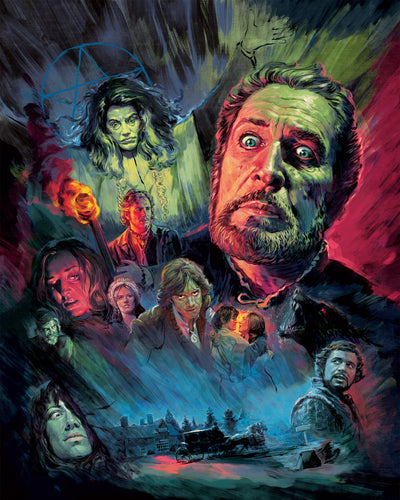
SR: I think Murders in the Rue Morgue is number five? Cry of the Banshee, The Corpse, The Snake Woman, Doctor Blood’s Coffin and Rue Morgue – yes five. And you can see in just those five films the sheer variety of themes, styles and sub-genres that can be summarised as "British horror". Demand for these releases has been such that we’ve had to increase the initial stock quantity for each title due to the number of pre-orders and it’s great to see these films being enjoyed and appreciated anew by viewers of all ages.

Director Val Guest loves a good silhouette shot, doesn’t he?
HN: Cool. Thanks for the updates, Steve. Getting back to Break in the Circle, what surprised you when you first watched the film in preparation for its release?
SR: When I first watched Break in the Circle in preparation for its release it was from the existing tape master, probably made forty or more years ago, and I was surprised because it looked exceptionally rough. Mark Stanborough, head of restoration at Hammer, and the team at Silver Salt really excelled themselves on this film as it now looks gorgeous (and they even reinstated a shot that had been missing from the end of the tape master so that the film is presented here as it was intended).
HN: And without giving too much away, were there any stand-out scenes for you? For me it’s where a typewriter key gives us a major revelation… I shall say no more, but it’s a lovely moment! How about you? Favourite moment, either for a plot twist or cracking piece of action?
SR: There’s a scene towards the end, after Morgan returns from Hamburg where he visits Marius Goring’s rapacious mogul character and surprises him by pretending to be his butler. Goring’s reaction is memorable but the spiky banter that follows is even more so. I’m willing to bet that both actors enjoyed shooting that scene.

Text: ‘The Scarlet Pimpernel? At your service, mademoiselle!’ Marketing material showing Forrest Tucker (right) with Marius Goring. The latter played an impressive range of heroes and villains, including – during the same year as the release of Break in the Circle – Sir Percy Blakeney in the ITC show, The Adventures of the Scarlet Pimpernel.
HN: And finally, let’s wrap it up with one of those old ‘finish the sentence’ questions that we used to do ages ago… Complete this line: You’ll love Break in the Circle if…
SR: ...you’ve enjoyed any of our Brit noir releases to date or want to see the missing link between them and Sangster’s later Eurocentric psycho-terrors. It’s a key piece of Hammer history.
Many thanks to Steve Rogers for taking time out to talk to us about Break in the Circle. You can pre-order the film (and its extensive supporting material) now or check out other titles in Hammer’s Limited Collector’s Edition range.